
Plots in Alava - buy, sell or rent easily

Find plots by category in Alava (Province)


Plots for sale with most wanted features


Latest publications of land and houses for sale in Alava (Province)

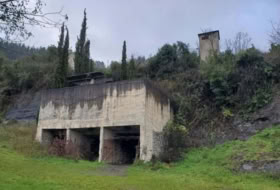
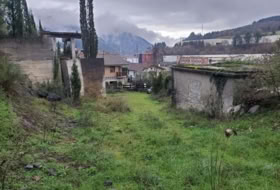
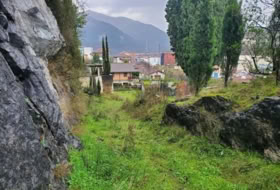
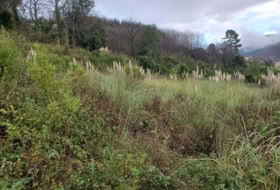


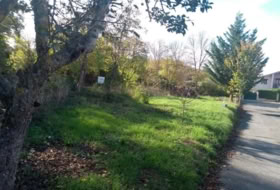






Where to buy land in Álava
The cheapest plots for sale in Álava are in Salinas de Añana and Gauna, followed by Bernedo and Vitoria with slightly higher prices. Even so, prices in the province are above the national average, due to the scarce supply of land.
Azáceta, Elciego, Gujuli and Osma are the towns with the most expensive urban land in the province. The situation of developable land for sale is similar to that of urban land, since demand is practically the same and it is concentrated in the same towns. Rural land, on the other hand, has a lower average value because more of it is available.
Vitoria-Gasteiz, the nerve centre of the province of Álava
Urban land in Álava covers more than 13,000 hectares, occupying only 4% of the total territory.
Despite the urbanization fever of recent years, mainly in Vitoria and Ribera Baja, the percentage of urbanization is less than 60%, so there is zoned land that remains undeveloped.
The largest urban concentration is in its capital, Vitoria-Gasteiz, seat of the Basque Government and administrative capital of Euskadi. It is a commercial and service city, with great urban, industrial and logistical development, which has achieved balanced progress and one of the best qualities of life in Europe.
Álava, the most rural province of the Basque Country
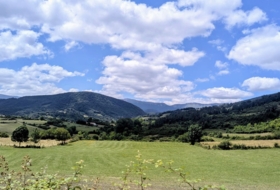
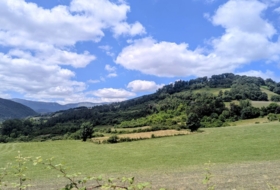
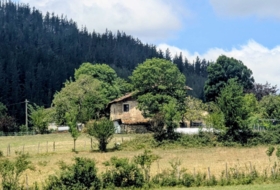
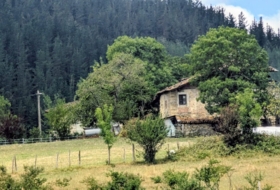
Álava is in the south of the Basque Country and has an area of 3,037 km². Despite its industrial progress, it is more rural than the rest of the Basque provinces, due to its natural wealth and valleys suited to growing cereals. It also has large forest areas that favour the growth of this sector.
The territory of Álava is dotted with small scattered towns that are highly dependent on the capital. In farming areas, they are located in places that do not take up fertile soil.
It has a markedly rural character, with well-preserved natural spaces and greater weight in terms of the agricultural sector, compared to the rest of the Basque provinces. Its agricultural area exceeds 98,000 hectares.
Farmland is characterised by crops on plains and valley bottoms, influenced by sprinkler irrigation that gives rise to various annual crops (cereal, potato and beet) and permanent crops (fodder).
Cereal stands out, occupying more than half of the arable land, with a high yield. In the valleys and in the lower areas of the slopes near the mountains, annual crops are combined with pastures and hay meadows, bordered by the Atlantic countryside.
Fruit trees are also grown, such as kiwis, although organically produced apple trees stand out in this category, most of which are used to make cider with the Euskal Sagardoa Designation of Origin.
The vineyard peach (melocotón de viña) is part of the landscape of La Rioja Alavesa, while the grapes for making txakoli are grown in the Ayala valley, a tradition since the 9th century, which currently has the Designation of Origin “Arabako Txakolina – Txakoli de Álava”.
Vegetables such as potatoes, beet, tomatoes, peppers, lettuce and chard are also grown.
The plots with a category of "high strategic value" (soils with greater agricultural capacity, where maintenance and preservation prevail) are wider and more extensive as a result of land consolidation; while those known as “transition rural landscape” (plots with less productive capacity, suited to agricultural and livestock areas of high strategic value or forest areas), have more elongated shapes, smaller surface areas and are generally narrow, with boundaries adapted to the dominant topography of the place.
Livestock farming is not as important in this area, although dairy cattle breeding stands out, as well as sheep to produce wool and cheese.
With the aim of improving the agricultural sector, the Álava Provincial Council offers grants for new farmers and to promote organic farming, modernization, and the mechanization of farms.
Forest land predominates in the province
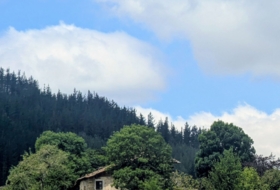
The forest landscape accounts for just over 60% of the area of Central Álava, more than half of which is protected and under community management.
Forests cover more than 188,000 hectares of land.
The most widespread native species is the beech, followed by the Portuguese oak, the holm oak and the Scots pine. Some of the fast-growing species, such as pine, are used in the timber industry, one of the oldest in this region. These "adopted" species have displaced the native ones, although work is being done to protect the latter to achieve sustainable use.
In addition, the forest land is used for cattle grazing, as on the marly plains of the Llanada.
Álava's industry has the largest supply of industrial land in the Basque Country
The urban and industrial land has expanded in an orderly manner in a succession of industrial estates, which today occupy almost the entire space between the Zadorra river and the historic centre of Vitoria-Gasteiz. In fact, the industrial area occupies 20% of all the space for economic activities in this Autonomous Community and almost 60% of all that exists in its Functional Area.
Álava is highly industrialised, and the main and largest industries in the Basque Country coexist together with SMEs and Micro-SMEs, which are committed to innovation and are dedicated to various activities such as: metallurgy, rubber, plastic, automotive, aeronautics, logistics, machinery, furniture, electrical equipment, transport or paper.
The industrial zones are located mainly along the main communication axes, in parks and industrial centres that have excellent connectivity.
In recent decades, the land for economic activities (including areas for logistical use of airports) has been the main protagonist of the changes in its use. The growth of industrial land is driven by its demand and its scarcity in neighbouring Gipuzkoa and Bizkaia, fostered by the aid and supply offered by the Provincial Council.
An expansion of industrial estates with vacant land is predicted both due to the demand and due to the criteria of the PTS of Economic Activities and Commercial Facilities, which aim to decentralise it around Vitoria-Gasteiz.
The power of a gust of wind
Currently, there are two wind farms located in Álava Central (in Badaia and Elgea-Urkilla) with a total of 60 wind turbines within the Functional Area. The EVE (Basque Energy Agency) plans to build new wind farms in the future. To do this, it has installed an 80-meter tower in the Iturrieta mountains to measure the wind, as well as in the Sierra de Arkamo, above the town of Escota.
In addition to this form of clean energy, there are 9 photovoltaic solar parks, among which the Ekian park stands out.
Álava, where a combination of factors gives rise to a great quality of life
In Álava, the sustainable development of both its industry and its surroundings has given rise to one of the best qualities of life in Europe. Its non-developable land is the most rural in the Basque Country, while the province also has the largest supply of industrial land in the Autonomous Community. A strategic combination that enhances wealth while respecting the environment and the forest landscape.


